
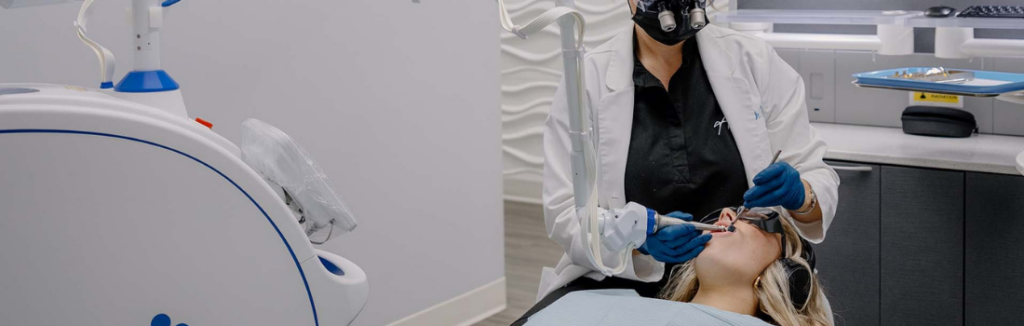
When most people think about getting a cavity filled, they picture the familiar dental drill, numbing injections, and the vibration that comes with traditional dentistry. While this method has been used successfully for decades, newer technology has introduced an alternative: laser dentistry. Understanding the difference between a laser filling and a regular filling can help patients make informed decisions about their care and feel more comfortable during treatment.
Understanding Traditional Dental Fillings
Traditional fillings rely on a mechanical dental drill to remove decay from the tooth. The drill works quickly and effectively, but it also creates sensations that some patients find uncomfortable. The vibration, pressure, and sound can contribute to dental anxiety, and because the drill generates heat, numbing injections are typically needed to keep the procedure comfortable.
After the decay is removed, the tooth is cleaned and filled with a restorative material such as composite resin. This method is reliable and widely used, but it does come with the familiar experience of numbness, pressure, and sometimes post‑treatment sensitivity.
How Laser Fillings Work
Laser fillings use concentrated light energy to remove decay instead of a drill. The laser gently vaporizes damaged tooth structure with remarkable precision. Because it doesn’t rely on friction or pressure, many patients experience little to no discomfort during treatment.
Laser dentistry often reduces the need for anesthesia, and patients frequently report that the procedure feels quieter, smoother, and less intimidating. The laser can also help minimize sensitivity by sealing nerve endings as it works.
Key Differences Between Laser and Traditional Fillings
While both methods are effective, they differ in how they feel and how they interact with the tooth.
- Comfort: Laser fillings tend to be more comfortable because they avoid the vibration and pressure of a drill. Many patients do not require numbing.
- Precision: Lasers can target decay very selectively, often preserving more healthy tooth structure.
- Noise: Traditional drills are loud and can trigger anxiety. Lasers operate quietly, creating a calmer environment.
- Healing: Laser energy can reduce inflammation and sensitivity, which may lead to a smoother recovery.
- Experience for Children and Anxious Patients: The quiet, gentle nature of laser dentistry can make appointments easier for those who are nervous or sensitive to dental procedures.
Where Solea Fits In
At Shawano Family Dentistry, we use the Solea Dental Laser, an advanced system designed to make dental care more comfortable and efficient. Solea allows us to perform many cavity treatments without anesthesia, helping patients avoid needles and post‑appointment numbness. It also supports precise, minimally invasive care that aligns with modern dental standards.
If you’d like to learn more about how Solea works and the types of treatments it can be used for, you can explore our full overview here: https://shawanofamilydentistry.com/services/solea-laser-dentistry/
Choosing the Right Option
Both traditional and laser fillings are safe and effective. The best choice depends on the location of the cavity, the extent of decay, and the patient’s comfort preferences. During your visit, we’ll evaluate your needs and recommend the approach that will give you the healthiest and most comfortable outcome.
If you’re curious about laser dentistry or want to know whether Solea could be used for your next filling, our team is always happy to talk through your options.